How To Search for Raleigh Property Records
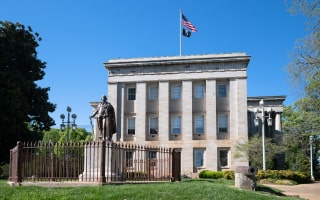
Before buying or investing in real estate in North Carolina, be sure to review property records. They contain a wealth of information, such as ownership history, tax assessments, liens, legal filings, zoning data, and other details that you can use to guide your investment decisions. Property records are considered public information in Raleigh, meaning that anyone can view them or get copies. The key to finding what you need is knowing where to look. You can use the list of key resources we have put together below to search for Raleigh property records.
Wake County Register of Deeds Office

The Wake County Register of Deeds is the official custodian for documents that affect the ownership and transfer of real property in Raleigh, such as deeds, deeds of trust, liens, mortgages, and subdivision plats. You can use the office's Consolidated Real Property Index tool to look up and request certified copies of these records online. Search results may be refined by name, date, book, page, and other criteria. If you prefer in-person services, you can visit the Register of Deeds office located at the Wake County Justice Center, Suite 1700, 300 S. Salisbury St., Raleigh, NC 27601. You can also call the office at (919) 856-5460 or email rodinfo@wake.gov for inquiries.
Wake County Department of Tax Administration
The Wake County Department of Tax Administration is responsible for valuing all property in the City of Raleigh for tax purposes and collecting tax payments from property owners in the city. The tax administration office is an invaluable source of property information, such as details on a property's ownership, characteristics, assessed values, and sales history, as well as tax-related information like valuations, tax statements, payment history, and outstanding balances. You can find this information online through the county's Real Estate Property Search portal. You can search by name, address, and identification numbers; the portal also has direct links to tools that can be used to view property maps and search for property tax bills. You can also visit the tax administration office at Suite 3800, 301 S. McDowell St., Raleigh, NC 27601 for in-person services or call them at (919) 856-5400 for inquiries.
Wake County Court
The Wake County Court is a good source for property information related to legal actions, like foreclosures, liens, title disputes, and civil judgments. You can either use the court's website or the North Carolina Judicial Branch's eCourts portal to search for these records online. You may also search for and request records in person at the Wake County Courthouse, located at 316 Fayetteville Street, Raleigh, NC 27602. Note that copy fees may apply.
City of Raleigh Property Research Resources
The City of Raleigh provides access to several resources that can be used to research property information online. These include an assessment liens search tool that can be used to check if a property has city-levied assessments and public nuisance abatement liens, and an iMAPS tool that can be used to view GIS maps (including aerial views) of properties in Raleigh.
Raleigh Property Taxes
Raleigh property taxes are vital to the local government. These taxes are used to fund various services, including public schools, police and fire departments, parks, road maintenance, affordable housing, emergency services, and much more. The Wake County Department of Tax Administration assesses the value of all properties in Raleigh for taxation purposes, calculates tax bills, and handles the collection of tax payments. Properties are assessed using a mass appraisal process to estimate their market value. This involves gathering and analyzing data from recent property sales, construction costs, and rental income across the city and using a computer-assisted mass appraisal (CAMA) system to evaluate the data, with consideration for each property's specific characteristics. Taxes are based on the property's assessed value and a tax rate that is set each year by elected county and municipal officials. Properties are reevaluated every four years to ensure that their assessed values reflect the current market and that property owners pay their fair share of taxes. Tax bills are based on the value set during the last revaluation, with possible minor adjustments for things like new construction.
Property tax bills are typically mailed in July and due by January 5th of the following year. A 2% interest penalty is charged for payments made after this date, with an additional 0.75% interest applied each month after January. If taxes remain unpaid, a lien may be placed on the property, and the county may eventually enforce collection through foreclosure. The Department of Tax Administration provides multiple ways to pay property taxes, including online, by mail, or in person. You can call the department at (919) 856-5400 or email them at taxhelp@wake.gov for questions or assistance.
![]() Assessments
Assessments

Property assessments in Raleigh are conducted by the Wake County Department of Tax Administration every four years through a process known as "revaluation". This process involves a mass appraisal approach that uses market data, such as recent comparable sales, neighborhood trends, and property characteristics, to determine fair market value for each property. Land and building values are calculated separately and then combined to establish the property's assessed value. The most recent revaluation in Raleigh (and Wake County as a whole) was completed in 2024 and is effective January 1st of that year, with the next scheduled for 2028.
While your property's assessed value will typically remain the same throughout the four-year revaluation cycle, major improvements or renovations can trigger a reassessment outside the regular schedule. You will usually receive a valuation notice in mid-January of a revaluation year or promptly after an off-cycle reassessment. If you believe your property has been incorrectly assessed, you can first request an informal review with the Department of Tax Administration. If you still disagree with the valuation, you may file a formal appeal with the Wake County Board of Equalization and Review.
Appeals may be filed each year during the revaluation cycle. However, if you are appealing in a non-revaluation year, you will be required to prove that an error exists based on the property's condition or market value as of the last revaluation date, not merely that market conditions have since changed. Appeals must generally be submitted before the end of April (specific dates are set annually by the board). The only exception is if a value change notice is issued after the April deadline, in which case the appeal deadline is December 31 of that year. You can contact the Wake County Department of Tax Administration at (919) 856-5400 for more information.
![]() Appraisals
Appraisals

In Raleigh, both assessments and appraisals work in a similar way. For either process, the values of nearby homes are relied upon to determine the value of the target property. For some specialized properties, an expert appraiser is required to determine the value. Courts, lenders, and estate planners all rely on appraisers in some situations.
![]() Tax Rates
Tax Rates

The median effective tax rate in Raleigh, North Carolina, is 1.10%, which is higher than both the national median of 1.02% and the North Carolina state median of 0.82%. The average annual tax bill in Raleigh is $2,834, which is also slightly higher than the national average of $2,400.
Here's a look at how Raleigh's tax rate compares to other counties in North Carolina:
- Brunswick County 0.43%
- Chatham County 0.85%
- Clay County 0.46%
- Durham County 1.31%
- Gates County 1.03%
- Guilford County 1.35%
- Mecklenburg County 0.61%
- Pitt County 1.17%
- Randolph County 0.68%
- Robeson County 0.87%
- Sampson County 0.92%
- Union County 0.67%
- Washington County 1.05%
![]() Exemptions
Exemptions

Property tax rates in Raleigh are higher than both the national and state averages, and some homeowners may find their tax bills difficult to manage. Thankfully, Wake County offers several tax relief programs that can help eligible homeowners reduce their tax burden. These include:
- Senior and Disabled Program: This is available to residents who are 65 or older or are permanently and totally disabled and meet certain income requirements. It excludes the first $25,000 or up to 50% (whichever is greater) of their home value from their tax bills. This program is also called the "Elderly or Disabled Homestead Exclusion".
- Disabled Veterans Program: This is also called the "Disabled Veterans Exclusion" and is available to honorably discharged veterans with a total and permanent service-connected disability or their unmarried surviving spouses. This program excludes the first $45,000 of their appraised home value from their tax bills.
You can contact the Wake County Department of Tax Administration for details on available tax relief programs and guidance on how to apply.
Raleigh Building Permits/Inspections
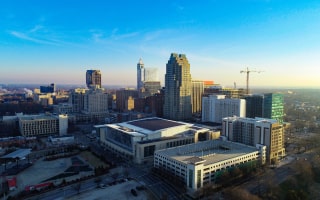
Most construction and renovation projects in Raleigh require permits. Exceptions include cosmetic upgrades like painting and replacing cabinets, and minor repairs that do not affect the building's structure or systems. The Raleigh Planning and Development Department handles the city's permitting process. The department provides a Permit and Development Portal that you can use to apply for permits, submit plans, and request inspections online. Note that account registration may be required to use this system. If you prefer in-person services, you can visit the department's Customer Service Center at Suite 400, One Exchange Plaza, Raleigh, NC 27601. You can also call (919) 996-2500 for assistance.
Common types of permits available in Raleigh include:
-
Building Permits: The primary permits for construction work that alters the structure, use, or safety of a building.
- Residential Permits: Required for work on residential property.
- Commercial (Non-residential) Permits: Required for work on non-residential buildings.
-
Trade Permits: These are required for work on specific systems within a building. They are often required in addition to a building permit and include:
- Electrical Permits: Required for the installation, alteration, or extension of electrical wiring systems.
- Mechanical Permits: Required for the installation, replacement, or modification of heating, ventilation, and air conditioning systems.
- Plumbing Permits: Required for the installation, alteration, or repair of water supply, drainage, vent, or other plumbing systems.
When applying for any of these permits, you must submit the proper documentation (building plans, blueprints, contractor licenses, materials lists, etc.). You must also pay the appropriate fee.
Building inspections are part of the permit process, and they ensure that the work complies with local building and safety codes. You can schedule an inspection through the online portal or in person at the office during regular business hours.
Real Estate in the City of Raleigh
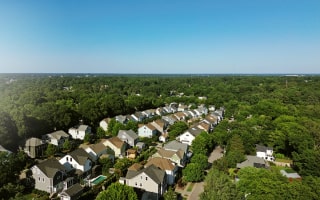
Raleigh is the capital of North Carolina and a core city of the state's famed Research Triangle. Named after Sir Walter Raleigh (the founder of the lost Roanoke Colony), Raleigh is a dynamic city that blends innovation with Southern charm. It is widely known for its robust tech industry, top-tier universities like North Carolina State University, and a highly educated workforce. The city is also home to several world-class museums, including the North Carolina Museum of Art, and historic landmarks like Pullen Park, the oldest public park in the state.
Raleigh, North Carolina, has a population of 467,665 residents. The city has 234,750 housing units: 219,004 of these units are occupied and 15,746 are vacant, indicating an occupancy rate of a little over 93%. The city has a mix of single-family homes, townhomes, condos, apartment complexes, accessory dwelling units, and affordable housing. Some housing styles include Ranch, Colonial Revival, Craftsman, Victorian, Mid-Century Modern, and Farmhouse. The average price of a house in Raleigh, NC, is $437,337, which represents a 2.7% decrease from previous years. However, keep in mind that house prices can vary significantly based on the area in the city. Here are a few examples of average home prices in different neighborhoods across Raleigh:
- East Raleigh $408,177
- Five Points $810,560
- Hillsborough $521,853
- North Central $692,890
- Six Forks $762,725
The Raleigh, North Carolina, real estate market is fairly competitive. While the market has seen some price fluctuations, it continues to attract a steady flow of new residents, supported by a robust local economy. Listed homes typically go under contract in about 29 days, and nearly 24% of listings are sold above the asking price.