How To Search for High Point Property Records
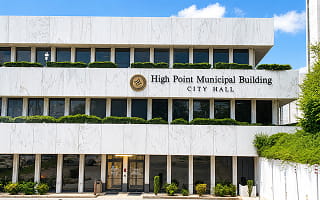
Property records are a trove of information that buyers and investors can use to research real estate and make smart, informed decisions. They provide valuable insight into ownership history, tax assessments, liens, legal filings, zoning data, and more. In High Point, these records are considered public information, meaning they are accessible to anyone who wants to view them or get copies. The key is knowing where to look. This is especially important because High Point is unique; it is the only city in North Carolina that extends into four counties: Guilford, Randolph, Davidson, and Forsyth. We have compiled a list of useful resources below to help you find different types of High Point property records.
County Register of Deeds Offices

The City of High Point is spread across four different counties: most of the city is in Guilford County, with portions extending into Randolph, Davidson, and Forsyth Counties. The Register of Deeds in each of these four counties maintains official copies of documents involving property ownership and transfers for their respective jurisdictions, such as deeds, mortgages, liens, easements, and plats. Each office provides an online search tool you can use to find records by name, date, or document type (specifics may vary by county). If you prefer to get copies of these records in person, you can visit the Register of Deeds office of the county where the property is located.
Here are the contact details and direct links to the online search tools for the Guilford, Randolph, Davidson, and Forsyth Counties' Register of Deeds offices:
-
Guilford County Register of Deeds Office - High Point Location:
Room 155, 325 E. Russell Ave.
High Point, NC 27260
Phone: (336) 641-6935
-
Randolph County Register of Deeds Office:
158 Worth St.
Asheboro, NC 27203
Phone: (336) 318-6960
-
Davidson County Register of Deeds Office:
110 West Center Street
Lexington, NC 27292.
Phone: (336) 242-2150
-
Forsyth County Register of Deeds Office:
201 North Chestnut Street
Winston-Salem, NC 27101
Phone: (336) 703 2700
County Tax Departments
High Point spans four counties: Guilford, Randolph, Davidson, and Forsyth. The tax department in each county is responsible for listing and valuing properties located within their respective boundaries for tax purposes and also ensuring that property taxes are correctly calculated, billed, and collected. These departments are the primary resource for High Point property records, including ownership information, sales history, valuation data, tax statements, payment history, and outstanding balances. Each county offers an online search tool that you can use to look up property information by name, address, and parcel/property ID number. Note that search criteria and the scope of available information may vary slightly by county. You can also visit the relevant tax department for in-person services.
Here are the contact details and direct links to the online search tools for the Guilford, Randolph, Davidson, and Forsyth Counties' tax departments:
-
Guilford County Tax Department - High Point Location:
325 E. Russell Ave.
High Point, NC 27260
Phone: (336) 641-7911
-
Randolph County Tax Department:
725 McDowell Road, First Floor
Asheboro, NC 27205
Phone: (336) 318-6500
-
Davidson Tax Department:
Suite 303, 913 Greensboro Street
Lexington, NC 27292
Phone: (336) 242-2160
-
Forsyth County Tax Administration:
201 North Chestnut Street
Winston-Salem, NC 27101
Phone: (336) 703 2300
County Courts
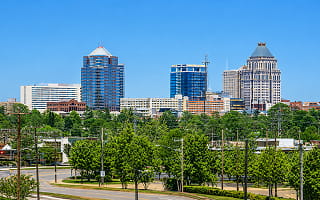
The Guilford, Randolph, Davidson, and Forsyth Courts are valuable resources for High Point property records related to legal actions, such as foreclosures, liens, code enforcement cases, title and boundary disputes, and other similar civil judgments. The North Carolina Judicial Branch offers an eCourts portal that you can use to look up these records online by name and case number. You can also visit the courthouse where the case was heard to view and request records. Note that copy fees may apply.
Here are the contact details of the Guilford, Randolph, Davidson, and Forsyth Counties' courthouses:
-
Guilford County Courthouse:
201 South Eugene St.
Greensboro, NC 27401
Phone: (336) 412-7300
-
Randolph County Courthouse:
176 East Salisbury St.
Asheboro, NC 27203
Phone: (336) 328-3000
-
Davidson County Courthouse:
110 West Center St.
Lexington, NC 27292
Phone: (336) 242-6701
-
Forsyth County Courthouse:
175 N. Chestnut Street
Winston-Salem, NC 27101
Phone: (336) 779-6300
City of High Point Resources
The City of High Point offers several interactive map apps on its website that you can use to explore property data, zoning, land use designations, utilities, and community resources online. These tools are especially helpful for confirming property locations, given the city's four-county overlap.
High Point Property Taxes
High Point property taxes fund essential local services, including public schools, police and fire departments, emergency services, road maintenance, parks, and more. Depending on where a property is located, either the Guilford, Randolph, Davidson, or Forsyth Tax Department is responsible for determining its value and collecting the taxes. Property values are established using a mass appraisal process that involves analyzing market data (recent property sales, construction costs, and rental income) and adjusting for each property's unique characteristics. Properties are assessed at 100% of their market value. Per state law, real property must be reassessed at least once every eight years, though some counties may adopt shorter cycles. In practice, all four counties typically implement a four to five-year reassessment cycle.
Property tax bills are typically mailed in July or early August each year. Payments are technically due by September 1st, but taxpayers have till January 5th (of the following year) to pay without interest. Taxes become delinquent on January 6th and begin accruing interest immediately, with additional penalties added monthly. Continued delinquency can result in a lien being placed on the property and possible foreclosure to collect the debt. The Guilford, Randolph, Davidson, and Forsyth Tax Departments offer multiple options for paying High Point property taxes, including online, by mail, and in person. You can call the following numbers for assistance or general inquiries:
- Guilford County Tax Department - High Point Office: (336) 641-7911
- Randolph County Tax Department: (336) 318-6500
- Davidson Tax Department: (336) 242-2160
- Forsyth County Tax Administration: (336) 703 2300
![]() Assessments
Assessments

The Guilford, Randolph, Davidson, and Forsyth Tax Departments conduct periodic assessments of properties in the City of High Point to determine their taxable value. State law requires that real property be reassessed or revalued at least once every 8 years, though some counties may implement shorter cycles. All four counties generally follow a four- to five-year reassessment cycle. Guilford and Davidson Counties completed their last revaluations in 2022 and 2021, respectively, and both have their next reassessments scheduled for 2026, while Randolph and Forsyth Counties had their last countywide reassessments in 2023 and 2025, respectively.
Assessments are done using a mass appraisal system that analyzes market data and individual property features to determine each property's fair market value. Reassessments are effective January 1st of the reappraisal year, and assessed values typically remain the same throughout the cycle. However, significant upgrades like additions or major renovations can trigger an off-cycle reassessment.
Property owners are typically sent valuation notices within the first quarter of reassessment years or immediately after an off-cycle reassessment. If you believe your property has been incorrectly valued, you may first request an informal review with the appropriate county tax department. If the issue remains unresolved, you can file a formal appeal with the county's Board of Equalization and Review. Appeals may be filed in both reassessment and non-reassessment years, with the appeal period usually falling in April to June, though specific dates vary by year and county. Late filings may also be accepted if you receive a valuation notice after the appeal deadline. You can get additional information on assessments and appeals in High Point by calling any of the following numbers:
- Guilford County Tax Department - High Point Office: (336) 641-7911
- Randolph County Tax Department: (336) 318-6500
- Davidson Tax Department: (336) 242-2160
- Forsyth County Tax Administration: (336) 703 2300
![]() Appraisals
Appraisals

High Point assessments work similarly to appraisals. They both determine the fair value of property by comparing similar properties with others in the local area that have sold recently. In cases of odd structures or new construction, the county may call upon an appraiser to help determine the value. Estate planners, courts, and lenders also use appraisals to value real property.
![]() Tax Rates
Tax Rates

Because High Point spans multiple counties, property tax rates across the city vary depending on location. For properties located in Guilford and Davidson Counties, the median effective property tax rate is 1.35% and 1.16%, respectively. Both are higher than the national median of 1.02% and the North Carolina state median of 0.82%. High Point properties located in Randolph County have a median effective property tax rate of 0.72%, below both the national and state medians, while those in the Forsyth County portion have an effective tax rate of 0.83%, slightly above the state median but below the national median.
Likewise, the average annual tax bill in High Point also varies by location: $1,697 for properties in Guilford, $1,237 for Randolph, $1,814 for those in Davidson, and $838 for properties in Forsyth. These figures are all below the national average of $2,400.
Here's a look at how High Point's tax rate compares to other counties in North Carolina:
- Alleghany County 0.70%
- Brunswick County 0.43%
- Chatham County 0.85%
- Clay County 0.46%
- Durham County 1.31%
- Gates County 1.03%
- Mecklenburg County 0.61%
- Pitt County 1.17%
- Randolph County 0.68%
- Robeson County 0.87%
- Sampson County 0.92%
- Union County 0.67%
- Wake County 1.10%
- Washington County 1.05%
![]() Exemptions
Exemptions

Even though property taxes in High Point are generally below the national average, some homeowners may still find it difficult to manage their tax bills. Fortunately, there are several tax relief programs available to help qualifying homeowners reduce their tax burden. These include:
-
Elderly or Disabled Homestead Exclusion: This excludes either the first $25,000 or up to 50% (whichever is greater) from a property's taxable value. Available to residents 65+ or permanently disabled who meet specific income requirements.
-
Disabled Veterans Exclusion: This excludes the first $45,000 from a property's taxable value. Available to honorably discharged veterans with a total and permanent service-connected disability and their unmarried surviving spouses.
-
Circuit Breaker Tax Deferment: This limits property taxes to a percentage of the homeowner's income. Available to residents 65+ or disabled who have owned and occupied their home for at least five years and whose income is below a certain threshold.
You can contact your county tax administration department to get more information on available tax relief programs:
- Guilford County Tax Department - High Point Office: (336) 641-7911
- Randolph County Tax Department: (336) 318-6500
- Davidson Tax Department: (336) 242-2160
- Forsyth County Tax Administration: (336) 703 2300
High Point Building Permits/Inspections
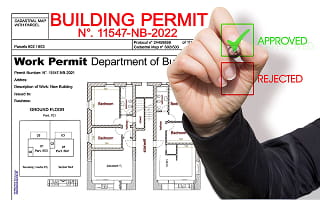
You need a permit to construct, repair, or alter structures and buildings in High Point. Exceptions may be made for cosmetic updates like painting and cabinetry installation, minor repairs, and certain projects on single-family residences that do not cost more than $15,000 and do not affect the building's structure or core systems. The permitting process is handled by the city's Build High Point division. You can apply for permits, schedule inspections, and pay fees online through its BuildHighPoint Citizen Access Portal. If you prefer in-person services, you can visit the Development Services Center at 211 South Hamilton St., High Point, NC 27260. You can also call (336) 883-3151 for assistance and general inquiries.
Common types of permits available in High Point include:
-
Building Permits: For new construction and structural alterations to existing buildings.
-
Residential Permits: Issued for work on single-family and one- or two-family dwellings.
-
Commercial Permits: Issued for work on multi-family residential properties (three units or more) and commercial property.
-
-
Trade Permits: For specialized work on a building's systems and can be pulled as "stand-alone" permits.
-
Electrical Permits: For electrical work, including new wiring and system upgrades.
-
Mechanical Permits: For HVAC system installations or modifications.
-
Plumbing Permits: For installing or altering plumbing systems.
-
When applying for any of these permits, you must submit the proper documentation (building plans, blueprints, contractor licenses, materials lists, etc.). You must also pay the appropriate fee.
Building inspections are part of the permit process, and they ensure that the work complies with local building and safety codes. You can schedule an inspection through the online portal or in person at the office during regular business hours.
Real Estate in the City of High Point
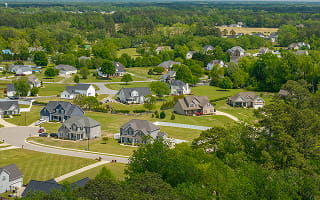
Known as "North Carolina's International City" and the "Home Furnishings Capital of the World," High Point is famous for the semi-annual High Point Market, the largest furnishings industry trade show in the world. It is the third-largest municipality in the Piedmont Triad region and serves as a major hub for manufacturing, logistics, and higher education, anchored by High Point University. Other notable attractions include the Bernice Bienenstock Furniture Library, Rosetta C. Baldwin Museum, Sechrest Gallery, Nido & Mariana Qubein Children's Museum, the World's Largest Chest of Drawers, and the Piedmont Environmental Center.
High Point, North Carolina, has a population of 114,059 residents. The city has 51,373 units, with 92% of these units occupied and 54% owner-occupied. The city features a diverse mix of housing options, including single-family homes, townhouses, condos, apartment complexes, historic homes, and specialty homes, with housing styles like Craftsman, Colonial Revival, Mid-Century Ranch, and Contemporary. The average price of a house in High Point, NC, is $242,441, which represents a 0.1% decrease from previous years. Keep in mind that house prices can vary significantly based on the area in the city. Here are examples of average prices in different High Point neighborhoods:
- Adams Farm $350,000
- Downtown High Point $217,000
- Grandover $734,500
- Lombardi $320,000
- Old Thomasville Rd. Area $90,000
- Sedgefield $725,000
The High Point, North Carolina, real estate market is a somewhat competitive market, with modestly rising prices and moderate demand, driven by the city's affordability and central location within the Piedmont Triad. Homes typically go under contract in around 22 days, with roughly 25% of listings selling above the asking price.
Searching across multiple government offices and databases to piece together a complete property profile can be time-consuming, but PropertyChecker simplifies the process by pulling key ownership details, tax records, transaction histories, and more into a single, easy-to-use platform. Whether you are buying, investing, or simply doing your due diligence, visit PropertyChecker.com to get the property information you need in minutes.